Handmade in Cape Town

How it's made

Sixty processes take a Bettél watch from drawing to finished piece — nineteen in wood, eleven in leather, thirty in hand assembly — in our family workshop in Muizenberg.

Shop the collection
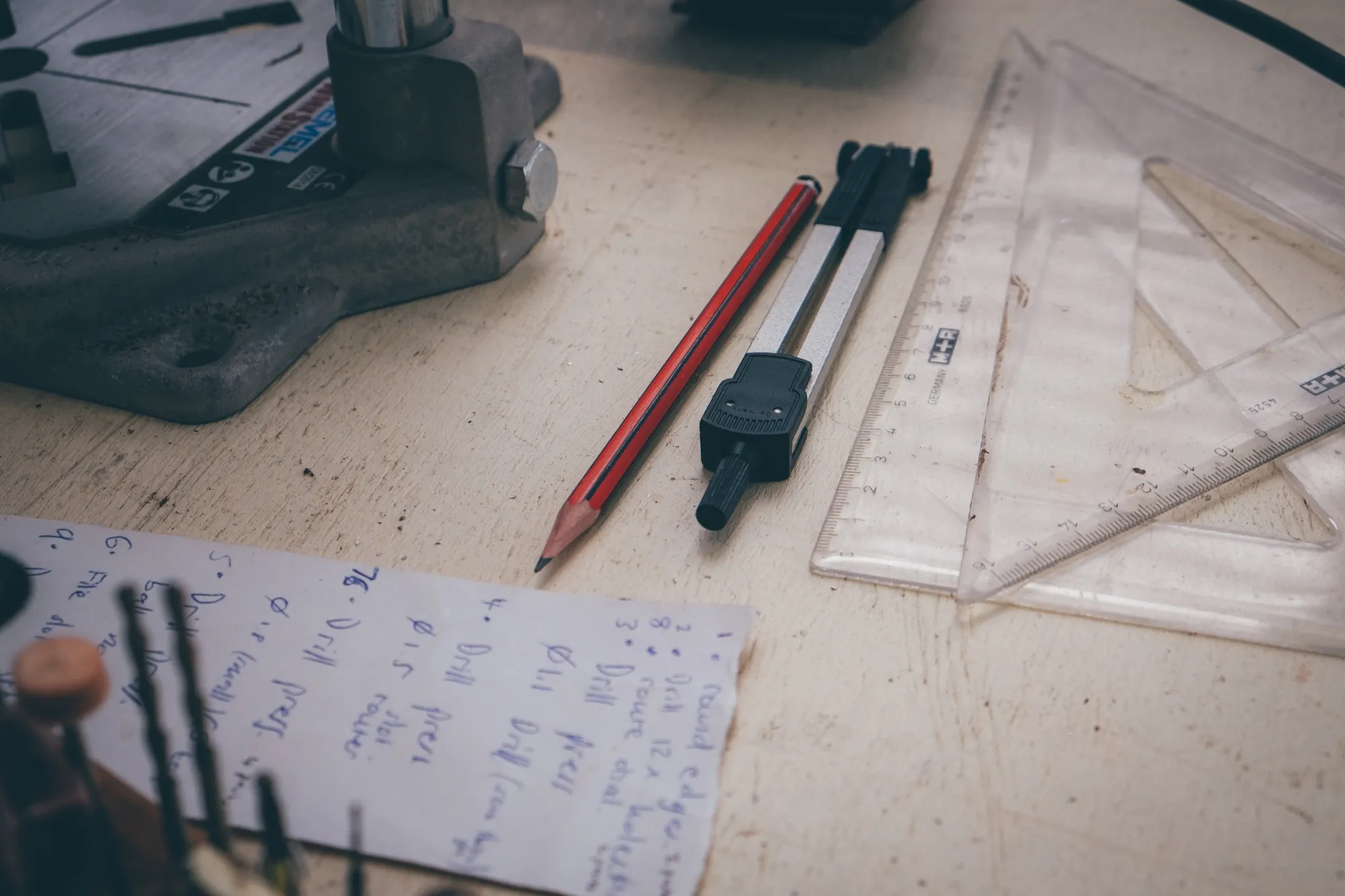
A pencil, marking gauge and set square on a workbench beside a handwritten, numbered list of drilling and filing steps

Sketches, and a numbered list

The first Bettél watches were sketched by hand, in pencil on paper, on the flight home from Indonesia — no drawing board, no instruments, just the sketches the designs still come from. What the bench needs is different: the scrap of paper here carries the steps in order, numbered — round the edges, drill twelve holes, drill press, file. Sixty of them, all told, before a watch is finished.
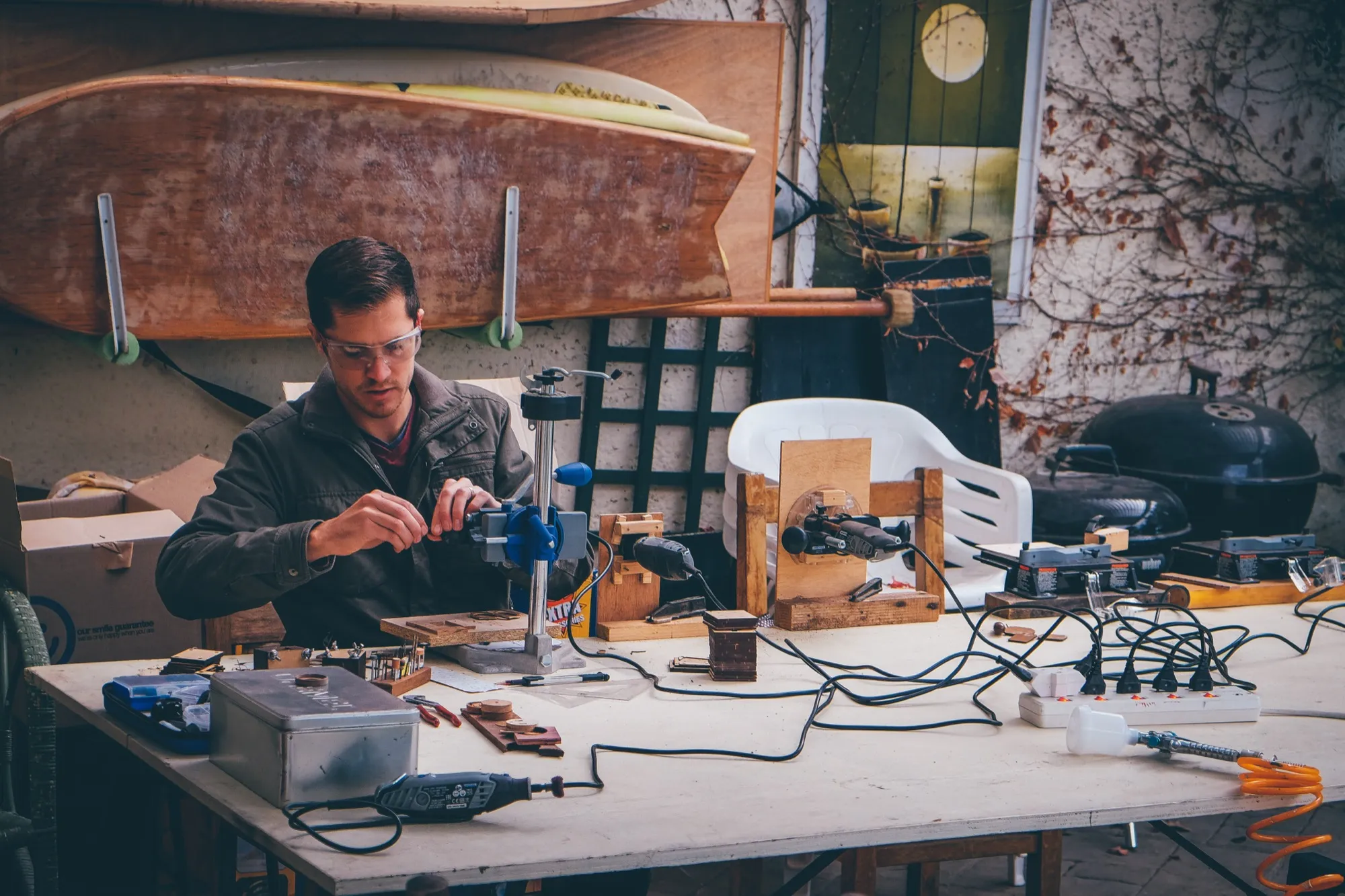
A craftsman in safety glasses shapes a small block of wood clamped in a rotary tool stand at an outdoor workbench

Cutting and shaping the case

Each case starts as a block of Kiaat, a South African hardwood. It is roughed out by machine, then finished by hand — the holes drilled, the edges rounded, the painting done at the bench. The machine gets the shape close; hands make it a watch.

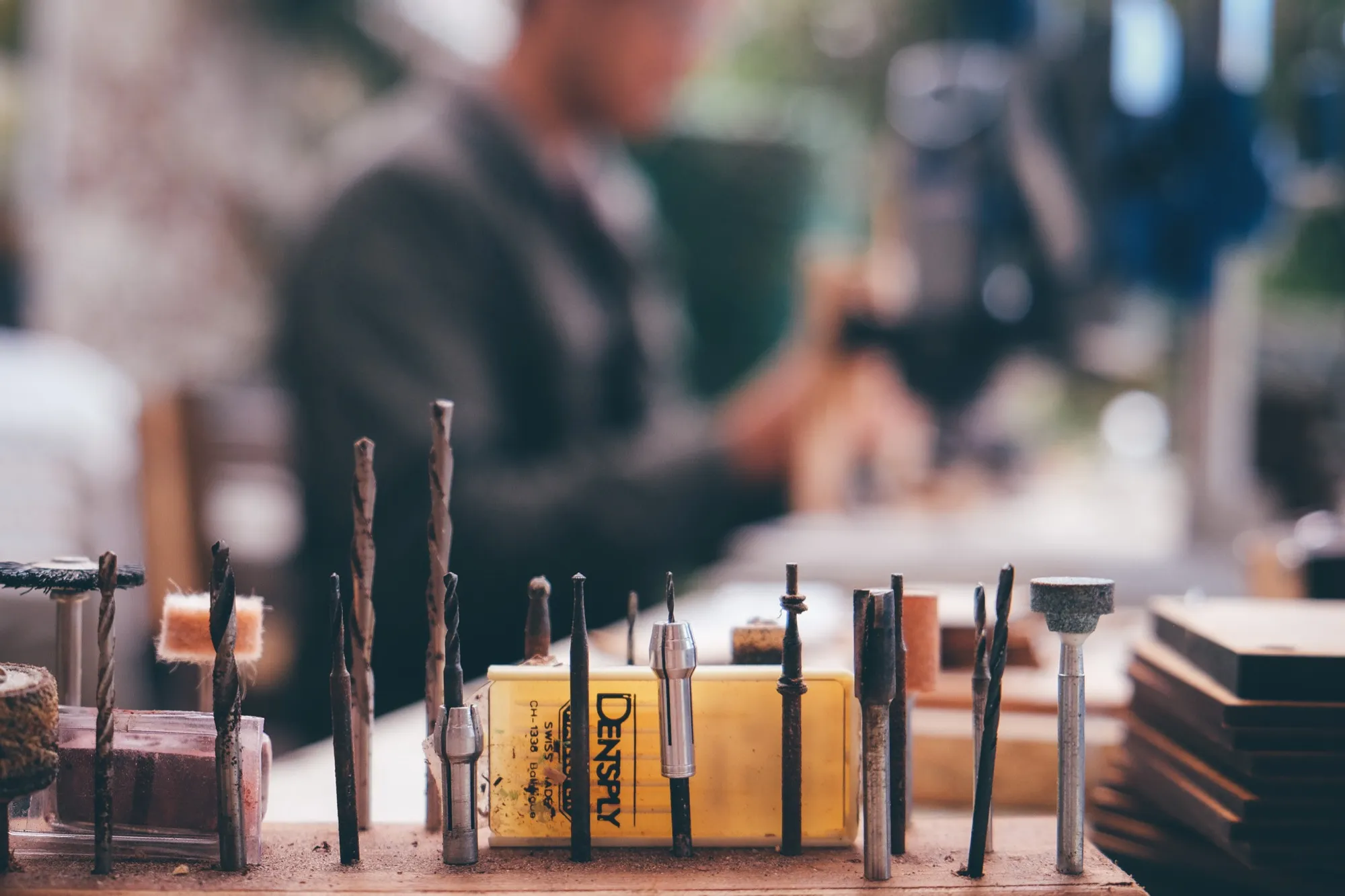
Rows of drill bits and small cutting tools standing upright on a workbench, with someone working blurred in the background

A tool for every shape

Drill bits and cutting heads of every size stand ready at the bench — the drilling and rounding are all done here by hand.

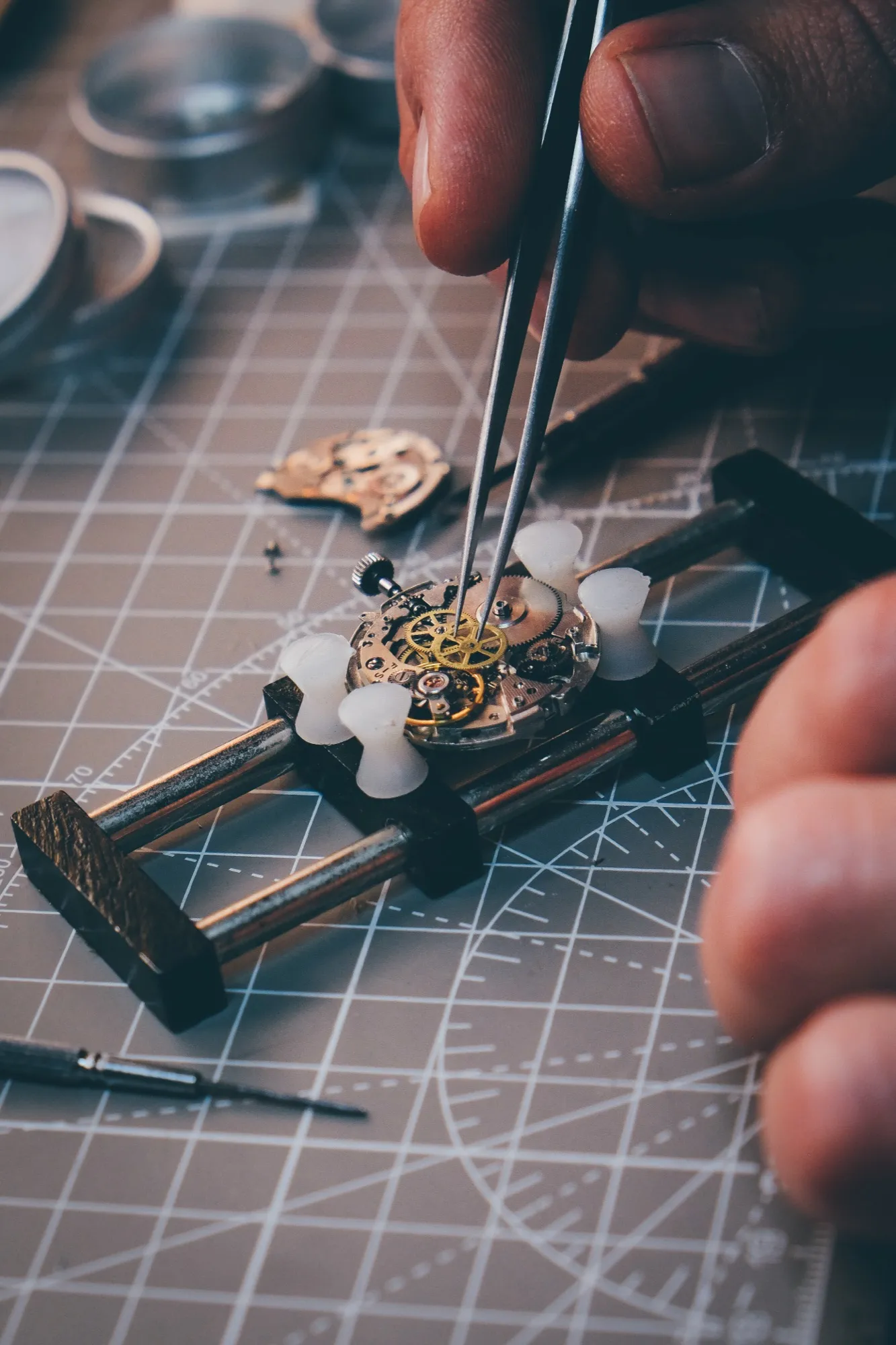
Hands using tweezers on the Swiss movement of the first Bettél automatic, held in a movement holder

The movement

Movements arrive new and ready — Miyota quartz, Japanese, across most of the range, and Japanese self-winding automatics in the Albatross Automatics — and each is set into its case by hand, with tweezers. The photograph is of a different one entirely: the Swiss movement behind our very first automatic, found in an antique shop and written off as beyond saving, then repaired and cased by hand.

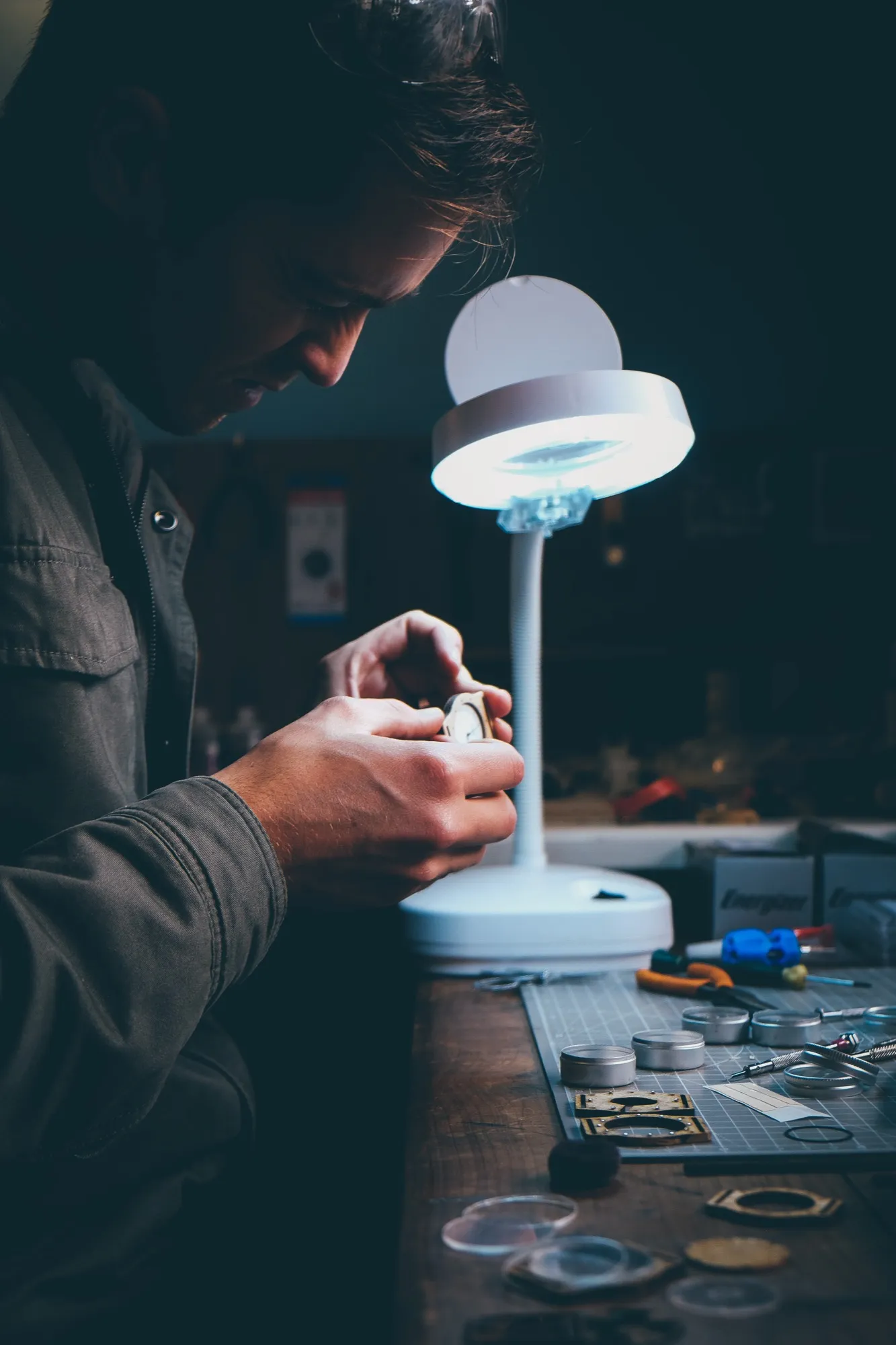
A craftsman examines a small watch closely under a desk lamp, with watch parts and tins on the table nearby

Finishing

Before it leaves the bench, every watch is checked over by eye under a lamp, with cases, dials and straps laid out alongside it.

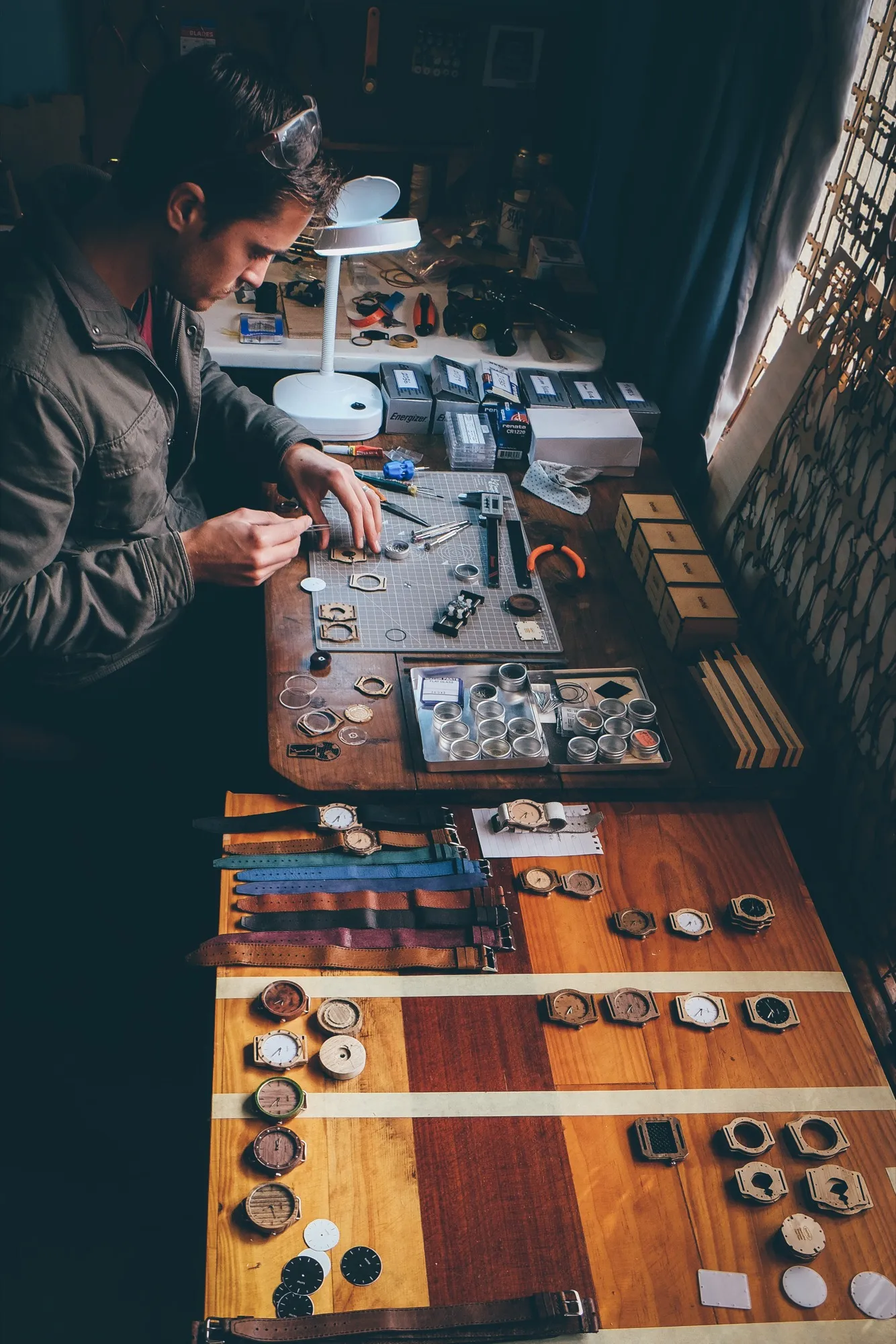
Rows of finished watch cases in different wood tones, with dials and straps laid out on the workbench

No two the same

Wood is a natural material, so every case — and every wood dial, in white beech or American walnut — carries its own colour and grain, no two ever quite alike.

Build your own watch